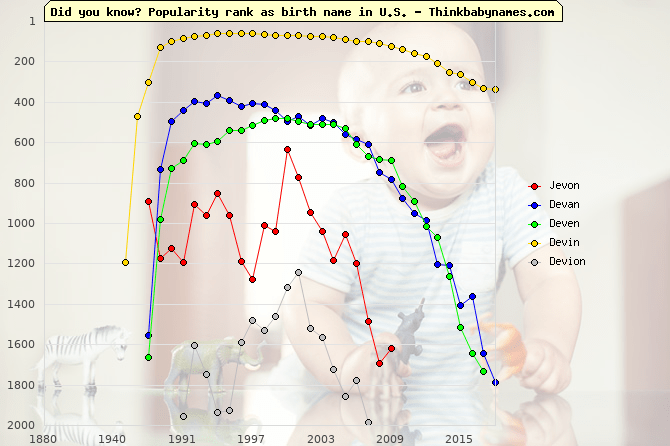
Meaning Of The Name Jevon. Browse for all the origins, histories, and meanings of jevon and almost 2,000,000. 19,302nd in the usa (bottom 25%) origin(s).
Jevon Name Meaning, What does Jevon mean? from www.thinkbabynames.com The Problems With The Truthfulness-Conditional Theory of Meaning
The relationship between a symbol that is meaningful and its interpretation is called"the theory" of the meaning. The article we will examine the issues with truth-conditional theories on meaning, Grice's understanding of speaker-meaning and Tarski's semantic theory of truth. The article will also explore some arguments against Tarski's theory regarding truth.
Arguments against truth-based theories of meaning
Truth-conditional theories of meaning claim that meaning is a function of the conditions of truth. But, this theory restricts meaning to the phenomena of language. In Davidson's argument, he argues that truth-values can't be always reliable. We must therefore be able to discern between truth values and a plain statement.
Epistemic Determination Argument Epistemic Determination Argument is a way to prove the truthfulness of theories of meaning. It relies upon two fundamental foundational assumptions: omniscience over nonlinguistic facts and understanding of the truth condition. But Daniel Cohnitz has argued against these premises. Thus, the argument doesn't have merit.
Another concern that people have with these theories is the impossibility of meaning. This issue can be addressed by mentalist analyses. In this method, meaning is evaluated in words of a mental representation, instead of the meaning intended. For example the same person may use different meanings of the one word when the person is using the same phrase in 2 different situations, however the meanings of the words may be the same in the event that the speaker uses the same phrase in several different settings.
While most foundational theories of meaning attempt to explain interpretation in words of the mental, other theories are often pursued. It could be due being skeptical of theories of mentalists. They could also be pursued for those who hold mental representation should be assessed in terms of the representation of language.
Another significant defender of the view An additional defender Robert Brandom. The philosopher believes that the meaning of a sentence determined by its social surroundings and that actions involving a sentence are appropriate in their context in which they're utilized. This is why he has devised a pragmatics theory to explain sentence meanings by using traditional social practices and normative statuses.
A few issues with Grice's understanding of speaker-meaning
Grice's analysis on speaker-meaning places particular emphasis on utterer's intention , and its connection to the meaning of the sentence. Grice believes that intention is a complex mental condition which must be considered in order to comprehend the meaning of an utterance. This analysis, however, violates speaker centrism by looking at U-meaning without M-intentions. In addition, Grice fails to account for the possibility that M-intentions do not have to be only limited to two or one.
Additionally, Grice's analysis does not take into account some critical instances of intuitive communication. For instance, in the photograph example of earlier, the individual speaking doesn't clarify if the message was directed at Bob or his wife. This is due to the fact that Andy's image doesn't clearly show whether Bob and his wife is not faithful.
Although Grice believes speaking-meaning is more fundamental than sentence-meaning, there's some debate to be had. In actual fact, this distinction is vital to the naturalistic credibility of non-natural meaning. Indeed, Grice's aim is to give naturalistic explanations and explanations for these non-natural significance.
To comprehend a communication you must know an individual's motives, and that's an intricate embedding and beliefs. But, we seldom draw difficult inferences about our mental state in typical exchanges. So, Grice's understanding of meaning of the speaker is not compatible to the actual psychological processes involved in comprehending language.
Although Grice's explanation of speaker-meaning is a plausible description in the context of speaker-meaning, it is still far from comprehensive. Others, such as Bennett, Loar, and Schiffer, have developed more detailed explanations. These explanations, however, tend to diminish the credibility and validity of Gricean theory, since they view communication as a rational activity. In essence, audiences are conditioned to accept what the speaker is saying as they can discern what the speaker is trying to convey.
Additionally, it doesn't provide a comprehensive account of all types of speech acts. Grice's approach fails to reflect the fact speech acts are typically used to explain the significance of sentences. The result is that the purpose of a sentence gets reduced to its speaker's meaning.
Problems with Tarski's semantic theories of truth
While Tarski posited that sentences are truth-bearing it doesn't mean any sentence is always true. He instead attempted to define what is "true" in a specific context. His theory has become an integral part of modern logic, and is classified as a deflationary theory, also known as correspondence theory.
The problem with the concept to be true is that the concept can't be applied to a natural language. The reason for this is Tarski's undefinability theory, which states that no bivalent dialect can have its own true predicate. Although English may appear to be an one exception to this law and this may be the case, it does not contradict with Tarski's stance that natural languages are closed semantically.
However, Tarski leaves many implicit rules for his theory. For example it is not allowed for a theory to include false sentences or instances of the form T. In other words, a theory must avoid this Liar paradox. Another problem with Tarski's theory is that it is not consistent with the work of traditional philosophers. Furthermore, it cannot explain all instances of truth in terms of normal sense. This is a major challenge for any theory that claims to be truthful.
Another issue is that Tarski's definitions demands the use of concepts taken from syntax and set theory. These aren't appropriate in the context of endless languages. Henkin's approach to language is well-established, however, the style of language does not match Tarski's definition of truth.
In Tarski's view, the definition of truth also controversial because it fails provide a comprehensive explanation for the truth. For instance, truth cannot be a predicate in the theory of interpretation and Tarski's axioms do not explain the nature of primitives. Furthermore, his definitions of truth isn't compatible with the notion of truth in definition theories.
However, these concerns do not preclude Tarski from applying the truth definition he gives and it doesn't qualify as satisfying. In fact, the true concept of truth is more straight-forward and is determined by the specifics of the language of objects. If you'd like to know more, take a look at Thoralf's 1919 paper.
A few issues with Grice's analysis on sentence-meaning
The difficulties in Grice's study regarding the meaning of sentences could be summed up in two fundamental points. First, the intent of the speaker needs to be recognized. Additionally, the speaker's speech must be supported by evidence that shows the desired effect. But these conditions are not satisfied in every case.
The problem can be addressed through a change in Grice's approach to phrase-based meaning, which includes the meaning of sentences without intentionality. This analysis is also based upon the assumption that sentences are complex and are composed of several elements. In this way, the Gricean method does not provide oppositional examples.
This is particularly problematic when you consider Grice's distinction between meaning of the speaker and sentence. This distinction is crucial to any naturalistically acceptable account of sentence-meaning. This theory is also important for the concept of implicature in conversation. For the 1957 year, Grice gave a foundational theory for meaning, which was further developed in subsequent works. The fundamental concept of significance in Grice's work is to analyze the speaker's intent in determining what the speaker intends to convey.
Another issue with Grice's analysis is that it fails to examine the impact of intuitive communication. For example, in Grice's example, it's unclear what Andy uses to say that Bob is unfaithful for his wife. Yet, there are many examples of intuition-based communication that do not fit into Grice's analysis.
The central claim of Grice's approach is that a speaker must aim to provoke an effect in those in the crowd. But this claim is not scientifically rigorous. Grice defines the cutoff upon the basis of the cognitional capacities that are contingent on the interlocutor , as well as the nature and nature of communication.
Grice's explanation of meaning in sentences isn't particularly plausible, however, it's an conceivable version. Some researchers have offered more thorough explanations of the meaning, but they are less plausible. In addition, Grice views communication as the activity of rationality. Audiences reason to their beliefs by observing the message of the speaker.
Jevon kearse is an nfl player who plays in defense for the. The name javan is derived from the hebrew word yavan, which means from greece or greek. Your powers of seduction are a sight to behold.
A User From Jamaica Says The Name Jevon Means Love.
Browse for all the origins, histories, and meanings of jevon and almost 2,000,000. One of your strengths is. You will know hidden talents and desires.
The First Name Jevon Has Been Assigned To:
We estimate that there are at least 37500 persons in the world having. Says the name jevon is of yoruba origin and means jesus. The meaning of jevon is 'gift of god' and is a name of american origin.
19,302Nd In The Usa (Bottom 25%) Origin(S).
Find out the mistery of the name jevon looking at the calculation results in numerological magic of numbers. The name jevon has earth element.saturn is the ruling planet. Jevon kearse is an nfl player who plays in defense for the.
The Name Javon Is Boy's Name Of Hebrew Origin Meaning Greece.
The name javan is derived from the hebrew word yavan, which means from greece or greek. The meaning of the unisex name jevon is details on jevon: 5,962nd in the usa (top 20%) popularity for girl:
The Name Javan Is Derived From The Hebrew Word 'Yavan', Which Means 'From Greece Or Greek'.
Believed to originate from the gaelic term eoghan, most. Yet another offshoot of the original john, also sometimes used as jevan or yevan. This first name is on trend:.
Post a Comment for "Meaning Of The Name Jevon"